
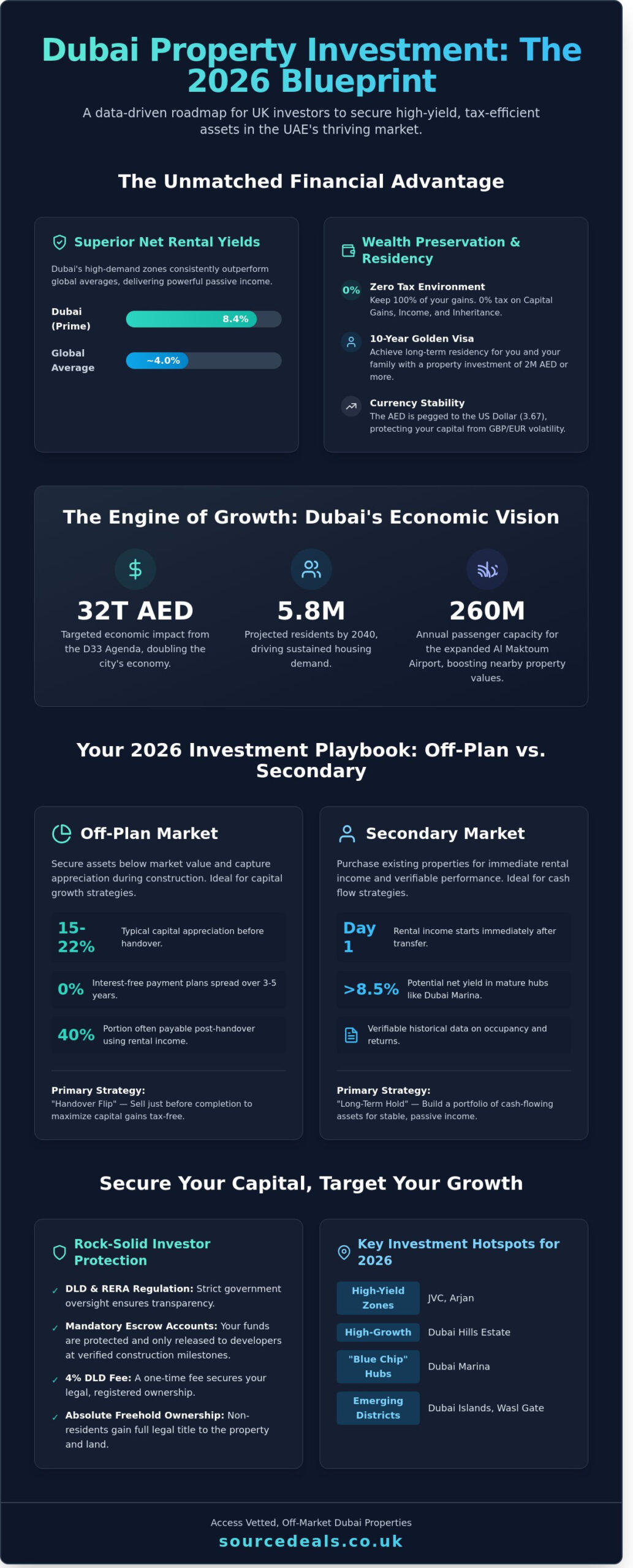
While the global average rental yield struggles to hit 4%, elite dubai property investment portfolios are currently generating 8.4% net returns in high-demand zones like JVC and Arjan. You’ve likely felt the anxiety of managing assets from 3,500 miles away, especially when commission-driven agents push oversupplied districts that don’t align with your financial goals. It’s frustrating to face biased advice when you’re looking for stable, tax-efficient growth in a market that moves at breakneck speed. We understand the need for data-driven clarity over sales hype.
This guide provides a clinical, results-oriented roadmap to the 2026 market. We cut through the noise to show you how to secure vetted, off-market deals that most retail investors simply can’t access. You’ll master the 2026 Golden Visa benefits, capitalize on the UAE’s tax-free status, and learn the specific metrics to distinguish between off-plan risk and high-yield secondary assets. We’re breaking down the exact strategies used by professional UK investors to build compliant, high-performing portfolios remotely. From identifying 8% net yield opportunities to finding a trusted sourcing partner, this is your blueprint for the next era of UAE real estate.
Key Takeaways
- Leverage the UAE’s 0% tax environment and transition into a global tech hub to maximize your capital preservation.
- Compare off-plan appreciation with immediate secondary market ROI to build a balanced, high-yield portfolio.
- Master the data-driven approach to dubai property investment by calculating net yields and choosing between short-term or long-term rental models.
- Identify high-growth corridors like Dubai Hills Estate and safe-haven “Blue Chip” districts to secure your asset’s future value.
- Access exclusive, vetted off-market opportunities that offer superior BMV potential compared to public real estate portals.
Why Dubai Property Investment is a Strategic Power Move in 2026
Dubai’s transition into a global technology powerhouse is complete. By 2026, the city has shed its legacy as an oil-dependent economy to become a magnet for high-net-worth individuals and tech entrepreneurs. This shift creates a massive opportunity for savvy investors. You aren’t just buying bricks and mortar; you’re buying into a 32 trillion AED economic roadmap. The 2026 landscape is defined by high-growth sectors like AI and fintech, which have replaced traditional industries as the primary drivers of demand.
Tax efficiency remains the primary driver for international capital. You keep 100% of your rental income and capital appreciation. There is 0% capital gains tax, 0% income tax, and 0% inheritance tax. This creates a net yield environment that UK and European markets simply cannot match. For investors looking for a safe haven, the AED/USD peg at 3.67 provides essential stability against the volatility of the Pound and Euro. Your assets are effectively denominated in US Dollars, protecting your wealth from currency devaluation back home.
Securing a Golden Visa is a game-changer for international families. Property ownership of 2 million AED or more grants a 10-year renewable residency. It’s a turnkey solution for those seeking long-term security, world-class healthcare, and an elite education system for their children. This residency status isn’t just a perk; it’s a strategic asset for global mobility.
The 2026 Market Outlook and D33 Economic Drivers
The Dubai 2033 Economic Agenda (D33) is the engine behind current demand. It targets a 32 trillion AED economic impact over the next decade. Population growth is following this capital influx; projections show the city will house 5.8 million residents by 2040. Infrastructure is the backbone of this growth. The massive expansion of Al Maktoum International Airport is already shifting the city’s center of gravity. This expansion is designed to handle 260 million passengers annually, boosting property values in the surrounding corridors like Dubai South and Expo City.
Regulatory Security: The Dubai Land Department (DLD)
Security is the foundation of every dubai property investment. The Dubai Land Department (DLD) and RERA enforce strict transparency that protects foreign capital. All off-plan funds must go into mandatory escrow accounts. Developers cannot access your capital until they hit specific construction milestones, which are verified by government inspectors. You’ll pay a one-time 4% DLD fee to ensure your ownership is legally registered and protected. Freehold ownership grants non-residents absolute legal title to the property and the land it sits on for an indefinite period.
Off-Plan vs. Secondary Market: Your 2026 Investment Framework
Choosing between off-plan and secondary assets defines your risk profile and capital velocity. Off-plan remains the primary engine for dubai property investment, offering interest-free payment plans that spread capital outlay over 3 to 5 years. You capture capital appreciation during the construction cycle, often seeing 15% to 22% price growth before the building is even finished. Conversely, the secondary market provides immediate cash flow. These are tangible assets in established hubs where you can verify occupancy rates and historical performance data before committing capital.
The 2026 luxury landscape relies on a 10-25% down payment model. This entry point secures high-spec units in emerging districts like Dubai Islands or Wasl Gate. Investors typically choose between the “Handover Flip,” selling just before completion to capture maximum appreciation, or the “Long-term Hold” to secure 7-9% net yields. If you want to scale your portfolio efficiently, vetting high-yield opportunities through professional channels ensures your capital hits the right targets without the guesswork.
Mastering Off-Plan Payment Plans
Post-handover payment plans function as the ultimate leverage tool. You pay for the final 30% to 40% of the property using the actual rental income it generates after completion. Look beyond the “Big Three” developers. Boutique firms often provide 8-12% better entry prices to attract savvy capital. Protect your downside by ensuring your Sales and Purchase Agreement (SPA) includes specific penalty clauses for delays exceeding a 12-month grace period.
Secondary Market: Hunting for Yield
Older, well-maintained units in mature hubs often outperform new launches on net yield. While a shiny new build might offer a 5% yield, a renovated 10-year-old unit in Dubai Marina can hit 8.5% due to lower entry costs. Always calculate the impact of service charges and chiller fees. High annual maintenance costs can gut your ROI by 2% or more. Smart investors target tired units in locations with 94% occupancy, invest 15% of the value in a modern fit-out, and instantly boost both capital value and rental demand.
Calculating Real ROI and Navigating the 2026 Oversupply Myth
Gross yield is a vanity metric that often blinds investors to the actual cash flow. To master dubai property investment in 2026, you must calculate net ROI by stripping away service charges, which currently range from AED 15 to AED 60 per square foot depending on the building’s luxury tier. Factor in a 5% provision for maintenance and a 10% to 15% fee for property management. While gross yields in prime districts like Business Bay hit 9%, your realistic net target should sit between 6% and 7.2% after all statutory and operational costs.
The 2026 market presents a clear divide between rental strategies. Long-term contracts provide 12 months of guaranteed liquidity and zero vacancy risk. Short-term lets offer a 20% premium on income but face higher volatility. Global interest rates for non-residents have stabilized at approximately 5%, meaning investors using 50% LTV mortgages need a minimum net yield of 5.5% to remain cash-flow positive. Precision in these numbers separates the amateurs from the professionals.
Short-Term Rental Management Strategy
Success in the “Holiday Home” sector requires a DTCM license and strict adherence to Department of Economy and Tourism regulations. You’ll face seasonal fluctuations where occupancy drops to 45% during the peak summer months of June and July. High-performing investors offset this by peaking at 95% occupancy during the winter season. Securing professional vacation rental management is essential to maintain “Superhost” status and maximize daily rates through dynamic pricing algorithms.
Mitigating the Oversupply Risk
The “oversupply” narrative is a broad generalization that ignores sector-specific data. While mid-market apartment supply is increasing, luxury villas and waterfront properties remain in chronic undersupply, with demand outstripping new handovers by 15% in 2025. Focus on ESG-compliant buildings; 2026 data shows that “Green” certified properties command a 12% rental premium over older stock. When you compare these tax-free returns to the 3% to 4% yields found in Germany real estate investment or the emerging opportunities to buy property in Egypt for foreigners, the dubai property investment case remains dominant for those targeting aggressive capital growth and immediate cash flow.
Prime Locations and Emerging Hubs: Where to Deploy Capital
Strategic dubai property investment in 2026 requires a surgical approach to location selection. Dubai Marina and Downtown Dubai remain the blue-chip anchors for capital preservation. These districts provide unmatched liquidity because supply is finite and global demand is constant. Investors looking for aggressive growth should pivot toward the southward expansion. The “New Dubai” corridor, stretching toward Al Maktoum International Airport, is the primary focus for 2026 capital deployment. This area is absorbing the bulk of infrastructure spending as the city prepares for a massive increase in passenger capacity.
High-yield hunters must look at emerging value hubs. Arjan and Jumeirah Village Circle (JVC) represent the highest rental yields for studio units, with vetted data showing net ROI exceeding 8%. These areas attract young professionals who prioritize turnkey living and commute efficiency. Simultaneously, the Expo City Dubai transition is creating a permanent tech and residential district. This legacy project is no longer a speculative bet; it’s a functioning economic zone with a 15-year master plan that ensures long-term occupancy from corporate tenants.
- Dubai Marina: 95% occupancy rates and high resale liquidity.
- JVC/Arjan: Entry-level price points with 8% to 10% gross yields.
- Expo City: Strategic positioning for the tech-sector workforce.
The Rise of Waterfront Luxury
Waterfront assets are the core of any dubai property investment portfolio aiming for capital appreciation. Emaar Beachfront offers a private island lifestyle, while Rashid Yachts & Marina targets the ultra-high-net-worth segment with 430 wet berths and premium retail. Statistics show that waterfront properties in Dubai consistently outperform inland units by a 22% margin in capital growth. While Cyprus property investment offers competitive Mediterranean entry points, Dubai’s coastal developments provide superior infrastructure and tax-free rental income that is hard to match globally.
Family-Centric Inland Communities
Dubai Hills Estate has established itself as the “Central Park” of the city. Demand for luxury villas in this master-planned community spiked 35% over the last 24 months. The Valley and Tilal Al Ghaf are also capturing the expat family market by integrating lagoons and green spaces into the residential fabric. Proximity to top-tier schools is the #1 driver for rental stability in 2026. Families sign longer leases and show lower default rates, making these communities the safest choice for steady cash flow. You’ll find that school district proximity reduces vacancy periods to less than 14 days on average.
Securing High-Yield Assets with Sourcedeals.co.uk
Public portals like Property Finder or Bayut show you what’s left over. Angel Dragons Ltd, operating as Sourcedeals.co.uk, gives you what’s hidden. We focus on exclusive off-market opportunities that offer genuine BMV potential, often securing units 12% to 15% below the projected 2026 market value. Our team applies a rigorous 20-point due diligence framework to every deal. We analyze the developer’s 10-year delivery history, current escrow status, and localized rental demand data to ensure your dubai property investment stands on solid ground. You don’t just get a property; you get a vetted financial asset.
We don’t just find a flat; we build your infrastructure. You get direct access to our Power Team of UAE-based legal experts, tax advisors, and local management firms. This turns a complex cross-border transaction into a streamlined, professional process. By integrating these high-performance assets into a broader international real estate investment strategy, you diversify risk and capture growth in the world’s most aggressive market. We handle the friction so you can focus on the numbers.
Why a Property Sourcer Beats a Sales Agent
A sales agent works for the developer. We work for you. Agents are paid to move stock; we’re paid to find yield. Our fixed sourcing fee model ensures our interests align with your ROI, not a developer’s commission structure. Adopting a real estate investing for beginners mindset means asking the hard questions about exit strategies and net yields before signing a contract. We provide the transparency agents often hide.
Remote Portfolio Management
Scaling a dubai property investment doesn’t require a flight to DXB. We implement digital tools for real-time rent collection and maintenance tracking directly from your UK base. Effective property portfolio management is the difference between a passive income stream and a second job. Our systems ensure your 2026 wealth is protected and optimized. Ready to build? Book a strategy session today to identify your next high-performance Dubai asset.
Master Your 2026 Dubai Real Estate Strategy
Success in dubai property investment for 2026 demands a shift from speculative buying to data-backed execution. You’ve seen that the oversupply narrative falls flat when you analyze the 5.1% population growth forecast for the emirate. Focusing on 7% net yields in emerging hubs like Dubai South or securing prime off-plan assets with 20/80 payment structures provides the stability your portfolio needs. The market rewards those who move fast on verified data instead of waiting for general trends to materialize.
Sourcedeals.co.uk streamlines this process by cutting through the noise of traditional portals. You get immediate access to vetted off-market opportunities and expert 2026 market analysis that most investors won’t see until it’s too late. Our comprehensive portfolio management tools ensure your capital works harder from day one. Don’t let high-yield assets slip through the cracks while others hesitate. You need a partner that values precision and speed as much as you do.
Secure your next high-yield Dubai investment deal today. The 2026 window is open, and the numbers favor the prepared investor. Your next major win is ready when you are.
Frequently Asked Questions
Can foreigners own property in Dubai?
Yes, international investors enjoy 100% freehold ownership of both the unit and the land in designated zones. These areas include prime locations like Dubai Marina, Palm Jumeirah, and Downtown Dubai. This legal framework ensures your asset is fully protected under UAE law. It provides the same security as property ownership in the UK or Europe.
Is there property tax in Dubai?
No, Dubai currently levies 0% annual property tax, 0% capital gains tax, and 0% rental income tax. This tax-free environment is a primary driver for dubai property investment in 2026. You only need to account for a one-time 4% Dubai Land Department (DLD) transfer fee. This maximizes your net yields compared to traditional Western markets.
What is the average ROI for Dubai property in 2026?
Investors can target net yields of 6% to 9% for long-term residential leases. If you opt for managed short-term holiday lets, returns often reach 10% to 13% in high-demand hubs. These figures significantly outperform London’s current average yields of 4% to 5%. Focus on vetted developments to secure these top-tier margins and ensure consistent cash flow.
How much is the down payment for an off-plan property?
You typically need a 10% to 20% down payment to secure an off-plan unit. You’ll also pay the 4% DLD registration fee at the time of booking. Most developers then offer structured payment plans. These often require 40% to 50% during construction and the remaining balance upon handover in 2026 or 2027.
Do I need to be in Dubai to buy a property?
No, you can complete the entire acquisition process remotely using secure digital signatures. The Sales Purchase Agreement (SPA) and DLD registration are handled via encrypted portals. This streamlined system allows you to secure high-yield dubai property investment opportunities from your home office. Our team coordinates with local trustees to ensure every transaction is compliant and verified.
What happens if a developer fails to complete a project?
Your capital is protected by DLD-regulated Escrow accounts that only release funds as construction milestones are verified. Law No. 8 of 2007 mandates that developers must deposit all investor payments into these accounts. If a project is cancelled, the Real Estate Regulatory Agency (RERA) oversees the refund process. This legal safety net minimizes your risk and ensures developer accountability.
Can I get a mortgage in Dubai as a non-resident?
Yes, UAE banks provide mortgage products to non-resident investors with a typical loan-to-value (LTV) ratio of 50% to 75%. You’ll need to provide a 25% to 50% down payment depending on the lender’s specific criteria. Interest rates for international borrowers currently fluctuate between 4.5% and 5.5%. Ensure your paperwork is vetted early to expedite the approval process.
Is Dubai oversupplied with apartments?
While supply is increasing, the D33 Economic Agenda aims to double Dubai’s economy by 2033, which fuels consistent demand. The city’s population grew by over 100,000 residents in 2023 alone. This rapid expansion keeps occupancy rates above 85% in prime sectors. Focus on exclusive, high-spec units to ensure your portfolio remains resilient against broader market shifts.